

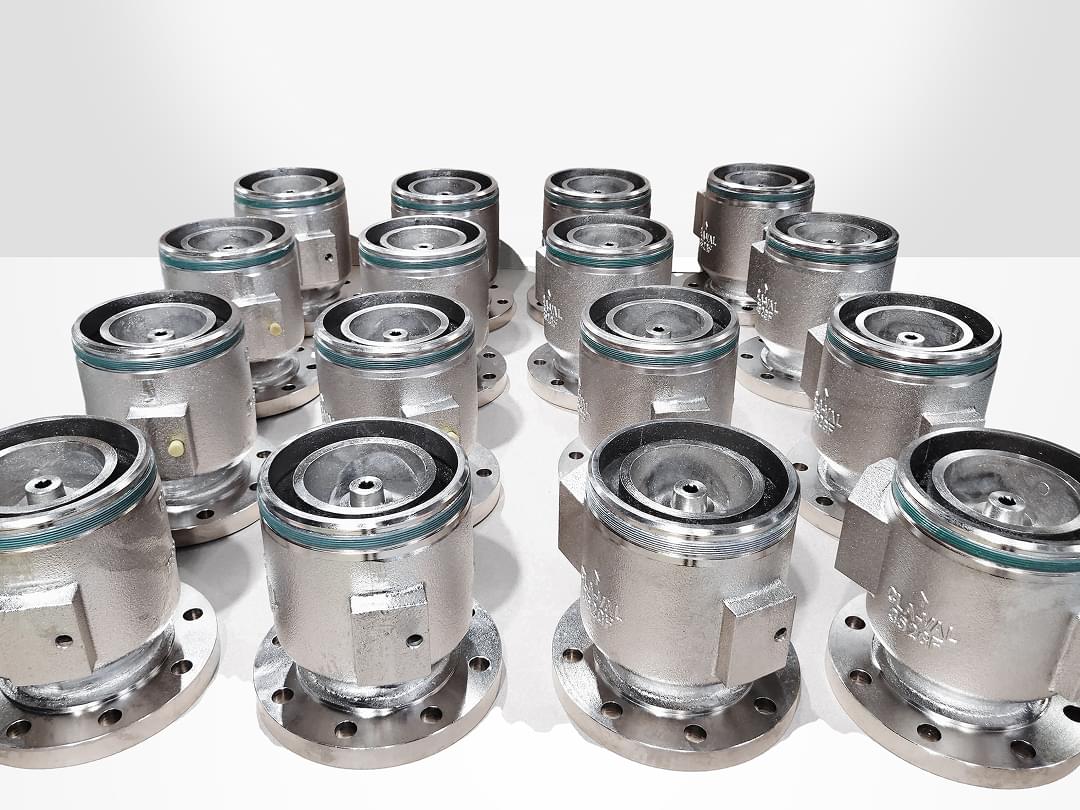
Entech is a trusted provider of electrolytic nickel plating services, adhering to the stringent standards of regulated industries in Canada and the USA.
The key difference between electroless and electrolytic nickel plating is that the latter uses direct current to convert nickel ions to metallic nickel.
For electrolytic nickel plating, sulfamate nickel is most commonly used due to its impressive ductility. Electrolytic nickel plating is used for transmission components, battery enclosures, aerospace fittings, and precision-machined parts.
The ductility of the sulfamate nickel coating ensures the parts do not break or be damaged during further machining.
The following industries will benefit from electrolytic nickel plating services:
● Aerospace
● Automotive
● Energy
● Medical
Enhanced wear resistance, corrosion protection, dimensional control, and unmatched aesthetics are only some advantages of electrolytic nickel plating.
Electrolytic nickel plating is a process of applying a nickel coating to conductive substrates, such as copper, brass, stainless steel, aluminum, and steel. Here’s how the electrochemical deposition process works:
The thickness and uniformity of the nickel coating can be controlled by adjusting the current density, solution temperature, and plating duration.
This entire electrochemical deposition process is possible thanks to two electrodes:
The cathode is the metal or alloy being plated. It undergoes reduction, facilitating nickel ions in the conductive bath to be deposited as solid metal onto the component being plated. The anode is pure nickel that replenishes in the conductive bath, ensuring a steady supply of nickel ions.
The primary difference between electroless and electrolytic nickel plating is that the former is an autocatalytic plating process, meaning it applies a nickel-phosphorus coating without the help of electricity.
Sulfamate nickel is the go-to choice for electrolytic nickel plating. It guarantees:
● Low internal stress
● High deposit quality
● Precision
● Zero distortion
Sulfamate nickel also facilitates increased control over the smoothness and thickness of the coating.
When it comes to purity, precision, and ductility, electrolytic nickel coating surpasses all expectations. The high-purity nickel deposits achieved through this process mean the components don’t crack or damage when machined further.
Impure nickel deposits do not boast the same ductility as high-purity nickel deposits. Thus, they often don’t meet the stringent standards of controlled industries such as aerospace, automotive, or energy.
The absence of internal tensile and compressive stresses ensures low-stress, high-purity nickel deposits via electrolytic nickel plating.
Electrolytic nickel plating adheres to stringent safety, quality, and performance standards necessary for controlled industries in Canada and the US. Aerospace, industrial manufacturing, energy, medical, plastic, and many other significant industries rely on electrolytic nickel plating for quality components.
An SAE Aerospace Material Specification, AMS 2403, sets the standard for general-purpose electrodeposited nickel plating. It is also used as a gold standard for electroplated components in the military. Adherence to AMS 2403 reflects higher strength, conductivity, and corrosion resistance of the components.
Electrolytic nickel plating that meets AMS 2424 specifications guarantees a low-stress deposit on conductive substrates. AMS 2424-compliant components are often used in the aerospace industry. Using sulfamate nickel to create a ductile, low-stress deposit is common to meet AMS 2424 standards.
ASTM B689 is the standard specification that focuses on non-decorative properties such as wear, corrosion, and fatigue resistance. This specification classifies the nickel coating based on thickness and composition. Aerospace, defense, oil, and electronics industry source plated components that adhere to the ASTM B689 specifications.
Electrolytic nickel plating is highly sought after across top industries due to the following benefits:
● Excellent corrosion resistance
● High ductility of nickel deposits
● Precision thickness control
● Excellent adhesion to base metals
● Suitable for repair plating
● High conductivity
The most popular industry-specific applications of electrolytic nickel plating include:
● Aerospace - Actuators, landing gears, and turbine components
● Automotive - Machine parts, hydraulic components, and moulds
● Electronics – Connectors and PCB components
● Oil and gas - Valves, pumps, and offshore components




Get dependable nickel plating services that meet the demands of your industry and the specifications of your project.